
Utah Criminal History Records
Utah criminal history records are maintained at the state level by the Bureau of Criminal Identification and through county courts across all 29 counties. The BCI serves as the official repository for criminal history data statewide. You can search your own record, request information about another person with proper authorization, or access court case data through public tools provided by the Utah State Courts. This guide covers each major way to find and obtain criminal history information in Utah.
Utah Criminal History Quick Facts
Utah Bureau of Criminal Identification
The Utah Bureau of Criminal Identification is the central agency for criminal history records in the state. BCI operates under the Utah Department of Public Safety and maintains the official criminal history database for all 29 counties. Every arrest, charge, and conviction entered into the system statewide flows through BCI. This makes it the single most comprehensive source for Utah criminal history information.
BCI is located at 4315 South 2700 West, Suite 1300, Taylorsville, UT 84129. The phone number is (801) 965-4445. Staff are available Monday through Thursday, 8:00 AM to 5:00 PM. The office is closed Fridays, weekends, and state holidays. If you plan to visit in person, bring a valid government-issued photo ID. Utah Driving Privilege Cards are not accepted as valid identification at BCI.
Effective July 1, 2025, BCI charges $20 for most criminal history requests. This covers right-of-access requests (your own record), name and date-of-birth checks, and fingerprint-based background checks. The $20 fee applies equally across all three request types. Accepted payment methods include cash, personal check, money order, cashier's check, Visa, and MasterCard. For mail requests, send your completed application and fee to BCI's mail address at 3888 West 5400 South, Taylorsville, UT 84129.
BCI also provides fingerprinting services. Livescan, digital printed, and wet ink fingerprints are all available. Fingerprinting appointments for non-criminal purposes must be scheduled in advance. BCI does not maintain juvenile offender records. Those requests go directly to the Juvenile Court in the relevant county.
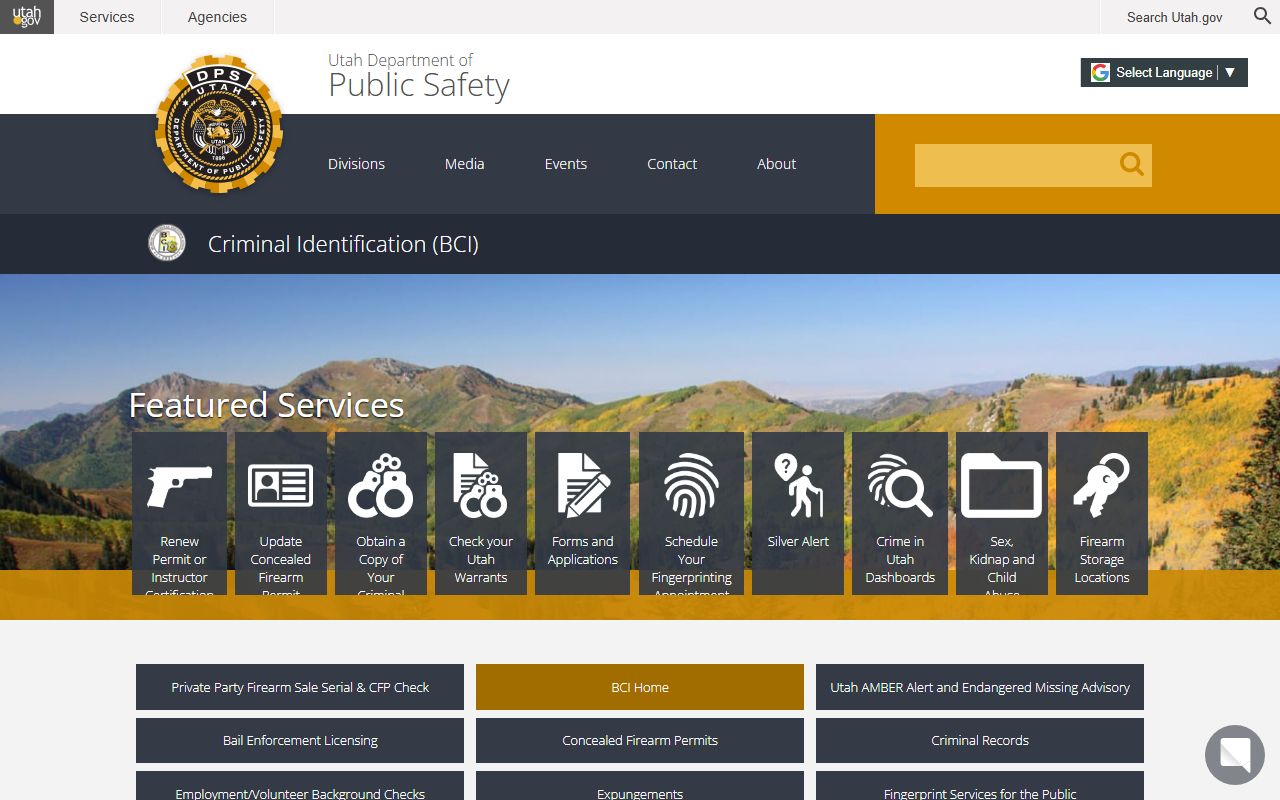
The BCI website at bci.utah.gov provides downloadable forms, fee schedules, and instructions for submitting criminal history record requests by mail or in person.
Note: BCI also serves as Utah's point of contact for the National Instant Criminal Background Check System (NICS), which governs firearm purchase eligibility checks statewide.
How to Search Utah Criminal History
Utah offers several ways to search criminal history records. The right method depends on who you are looking for and what level of detail you need. Some tools are free. Others require a subscription or a fee per search.
Your own criminal history record can be obtained directly from BCI in person or by mail. You fill out the Criminal History Record Application from bci.utah.gov, bring or mail a valid photo ID, and pay the $20 fee. In-person visits to the Taylorsville office are typically the fastest option. Mail requests can take longer depending on BCI's current volume.
Third-party requests are handled under stricter rules. Under Utah Code § 53-10-108, criminal history information may only be disclosed to criminal justice agencies or when specifically authorized by law. Third parties must submit a signed Third-Party Release Form authorizing BCI to release the subject's record. Without that signed authorization, BCI will not release another person's criminal history data to you.
For court case information, the Utah Courts system provides two main tools. The Utah Courts MyCase portal gives free access to active case information for parties to those cases. You can view scheduled hearings, filed documents, and case history. MyCase covers civil, criminal, family, and probate cases. The XChange system is a broader subscription service that opens statewide district and justice court records to approved users.
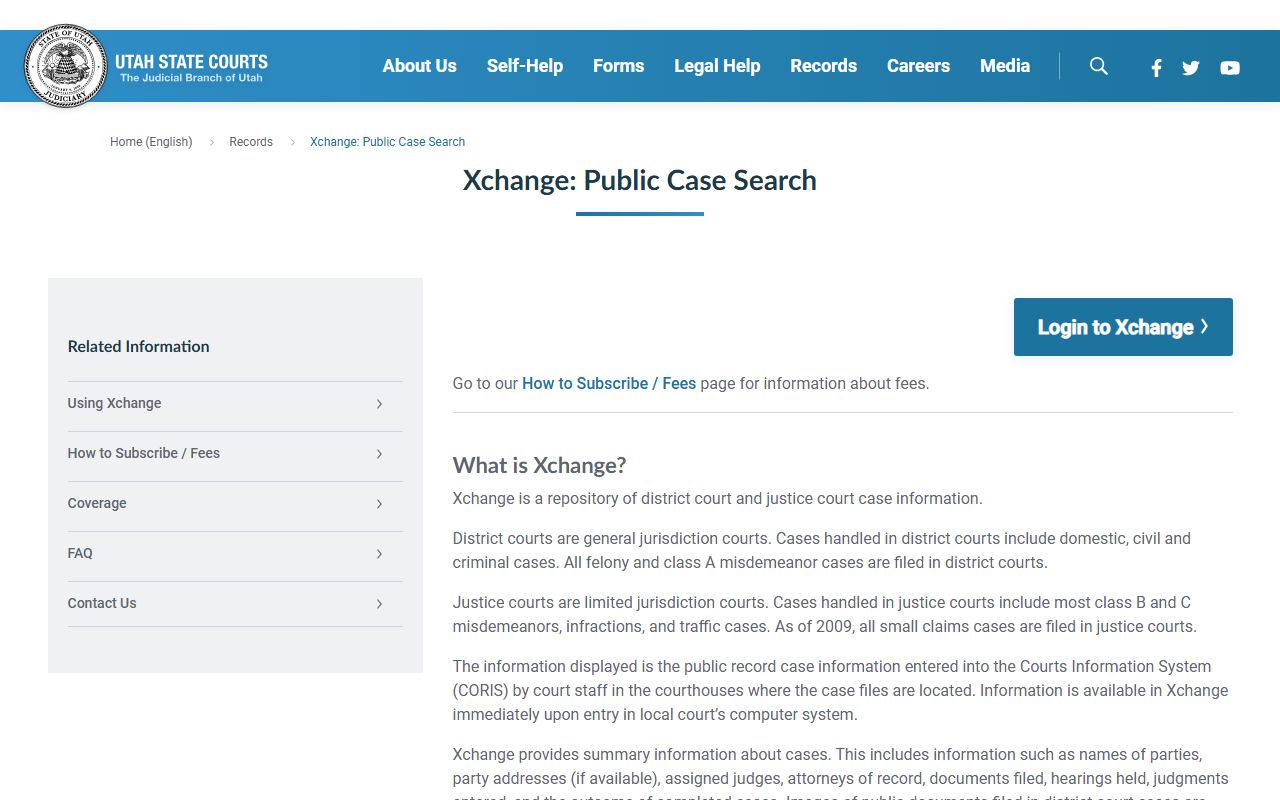
The XChange portal at utcourts.gov gives subscribers statewide access to court records including party names, case outcomes, hearing dates, and document filings.
Utah Courts and Criminal Records
Court records in Utah are a major source of criminal history information. District courts and justice courts across the state generate records for every criminal case filed. Those records include the charges filed, hearings held, plea agreements, verdicts, and sentencing information. These are separate from BCI's criminal history database, though the two systems overlap in many respects.
The XChange subscription service gives access to public court documents statewide. To use it, you first register at utcourts.gov/xchange and obtain a login. Registration is free, but approval is required. Once approved, a monthly subscription costs $30. Individual searches run $0.15 to $0.35 for the first 500 searches. Document downloads cost $0.50 to $1.00 per document. You can search by party name, business name, or date to locate criminal cases across all Utah courts.
If you want free access, two options exist. First, some justice court locations provide public XChange terminals at no cost. Second, the Utah State Law Library offers free public XChange access at the Matheson Courthouse, 450 S State St, Salt Lake City, UT 84111. Library hours are Monday through Friday, 8:00 AM to 5:00 PM. Reference help is available by phone at (801) 238-7990.
Under Utah Code of Judicial Administration Rule 4-202.02, court records are classified as public, private, protected, sealed, or juvenile. Most criminal case records fall under the public classification, meaning anyone can request or view them. Private and protected records have access limits set by statute or court order. Sealed and juvenile records are not available to the general public.
The GRAMA statute at le.utah.gov establishes the legal framework for public access to government records, including criminal records maintained by courts and law enforcement agencies across Utah.
Warrant Records in Utah
Outstanding warrants in Utah are searchable through the official statewide warrant database maintained by the Department of Public Safety. You can look up warrants at secure.utah.gov/warrants. The search requires a first and last name. A middle name is optional but improves accuracy when multiple people share the same name.
Results from a warrant search show the person's name, age, case number, court name, and the charges associated with the warrant. The database is updated regularly as new warrants are issued and existing ones are recalled or executed. Warrants remain active until law enforcement serves them or the issuing court recalls them. Under Utah Code § 77-7-5, an outstanding warrant stays in effect indefinitely unless one of those two things happens.
Note: The statewide warrant database reflects active warrants filed through Utah state courts, but individual county courts may issue warrants that take time to appear in the system.
Utah Corrections Offender Search
The Utah Department of Corrections Offender Search tool provides information about people currently incarcerated in state prison or under state supervision. You can search by first name, last name, middle name, or offender number. Results include current custody status, the facility where the person is held, offense information, and parole eligibility dates.
This database covers state prison inmates, parolees, and probationers under Department of Corrections oversight. It does not include people held in county jails. County jail records must be requested from the individual sheriff's office in the relevant county. The Corrections Records Bureau is at 14717 South Minuteman Drive, Draper, UT 84020, with phone (801) 545-5525.
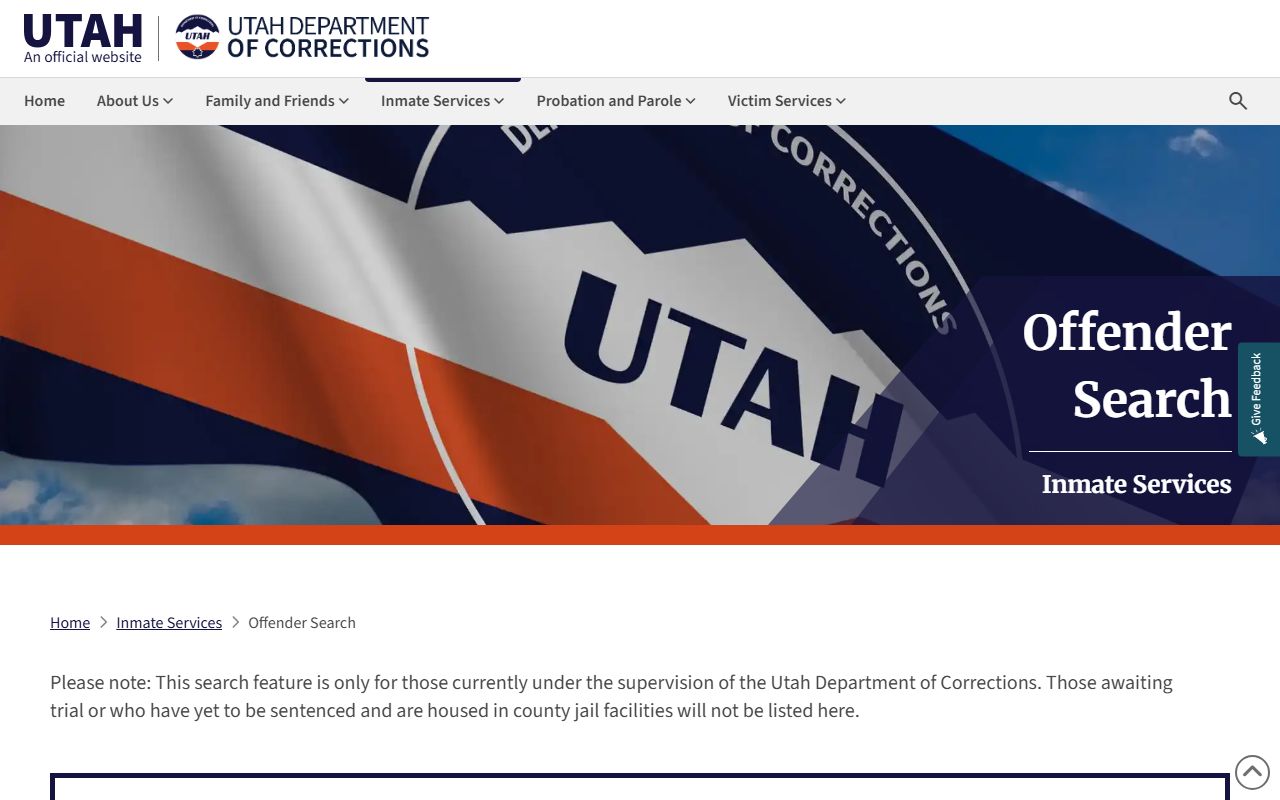
The Corrections offender search at corrections.utah.gov is updated regularly to reflect custody changes, transfers, and parole status for people under state supervision.
Expungement and Criminal Record Sealing
Utah law provides two paths for clearing a criminal history record. The first is automatic expungement under the Clean Slate law. The second is the traditional petition-based process for more serious offenses.
Utah's Clean Slate law took effect on February 10, 2022. Under this law, the Utah Courts automatically expunge qualifying misdemeanor records without any action required from the person. Eligible cases include Class A misdemeanor drug possession offenses, qualifying Class B and C misdemeanors, minor regulatory offenses, and infractions. If your record falls into one of those categories, the court system processes the expungement on its own schedule.
For records that do not qualify for automatic expungement, the petition process applies. You must first request a Certificate of Eligibility from BCI. The BCI fee for this certificate is $65. BCI reviews your criminal history and determines which offenses qualify. Once you receive the certificate, you must file your expungement petition with the appropriate court within 180 days. The court filing fee for the petition is $135. After a successful expungement, you may legally state that the criminal incident never occurred. Expunged records are sealed from public access under Utah Courts expungement rules.
Note: People with expunged records are permitted under Utah law to deny that the record ever existed when responding to most inquiries.
Public Records Law and Criminal History
Utah's Government Records Access and Management Act (GRAMA) governs access to government records, including criminal records. The core principle appears in Utah Code § 63G-2-201: "all records are public unless otherwise expressly provided by statute." This presumption of openness applies broadly across agencies and record types.
Under GRAMA, any person can request records from any government entity in Utah. A written request must receive a response within 10 business days. The agency must either provide the record, deny the request and explain why, or notify you that it needs more time and give an estimated response date. Agencies may charge fees for research and copying. Research fees under Utah Code § 63G-2-203 run $20 per hour after the first 15 minutes. Standard copy fees are $0.25 per page.
Not all criminal records are fully public. Active criminal investigations, records sealed by court order, expunged records, and juvenile criminal records are restricted. The separate Criminal Identification Act under Utah Code § 53-10-108 adds another layer of restriction on the release of criminal offender record information, limiting it to criminal justice agencies or entities with proper authorization. Misuse of access to criminal history record information is a class B misdemeanor under that statute.
The full text of Utah's Criminal Identification Act at law.justia.com covers the rules for disseminating criminal history record information and the penalties for misuse.
Utah Sex Offender Registry
The Utah Sex Offender Registry is maintained by the Utah Department of Corrections and is open to the public. You can search by name, location, or address at corrections.utah.gov. Results typically include the offender's name, photograph, physical description, current address, conviction details, and compliance status.
Sex offenders in Utah must register according to the requirements tied to their sentencing. Registration periods range from 10 years to lifetime depending on the nature of the offense. Failure to register is itself a criminal offense under Utah law. The registry is updated on a regular basis to reflect current address and status information. Institutions of higher education must be notified under federal law when a registered offender is employed, enrolled, or carries on a vocation at that institution.
State Archives and Historical Criminal Records
The Utah State Archives holds a large collection of historical court and criminal records dating back to the territorial period. The Archives serves as the repository for Utah Supreme Court records, district court records, municipal court records, and justice court records going back to the state's early years. Supreme Court and district court records date to the establishment of the Utah Territory.
Historical criminal case files from 1852 to 1887 are held at the Salt Lake County Archives. The Utah State Archives also maintains old Salt Lake City arrest records across several historical series, including records from 1871 through 1897. Many of these historical records are available online through the Archives' digital collections. For research assistance, visit the Archives in person at 346 S Rio Grande St, Salt Lake City, UT 84101.
The Utah State Archives research guide at archives.utah.gov describes the available criminal record collections, their date ranges, and how to request access to historical materials.
Local Police Criminal History Records
Beyond BCI and the courts, individual law enforcement agencies maintain their own records that contribute to the broader criminal history picture. Two major local agencies serve much of the Salt Lake Valley.
The Salt Lake City Police Department handles records requests through its GRAMA page at police.slc.gov/grama. The Records Service Desk is open Monday through Friday, 12:00 PM to 4:00 PM, and is closed on holidays. To request a record, contact the desk at (801) 799-3101. SLCPD also offers Livescan fingerprinting on a walk-in basis during those same hours. You must arrive by 3:30 PM to allow processing time. SLCPD also publishes crime statistics, use-of-force data, and weekly CompStat reports through its Open Data Initiative.
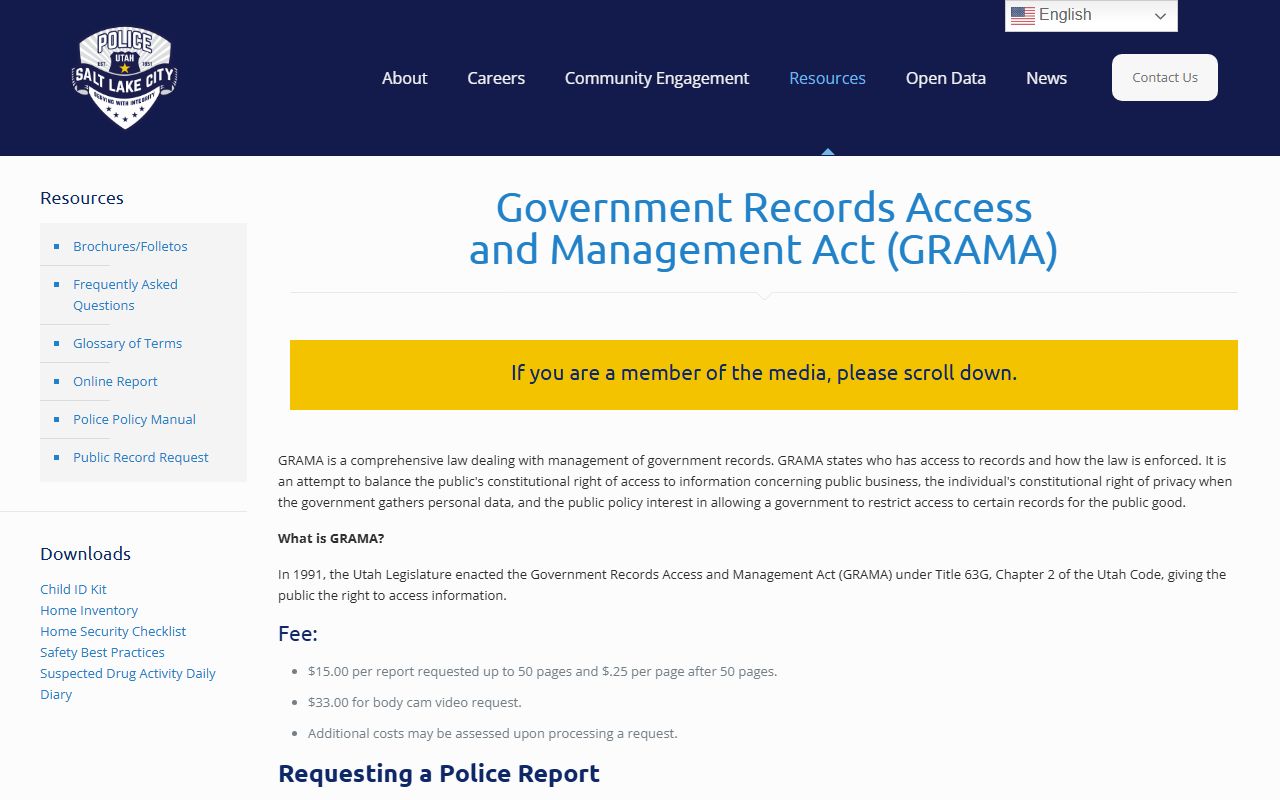
The SLCPD GRAMA page at police.slc.gov walks through the process for submitting a police records request and explains which documents are available to the public.
The Unified Police Department of Greater Salt Lake serves unincorporated Salt Lake County and several member cities. Records requests go through the web form at unifiedpoliceut.gov/records-request or by calling (385) 468-9755 Monday through Thursday. In-person pickup is by appointment only at 5190 Heath Ave, Kearns, UT. Records sent by mail carry a $10 fee per report. Processing takes up to 10 business days. Forms must be signed in the presence of a notary public before submission.
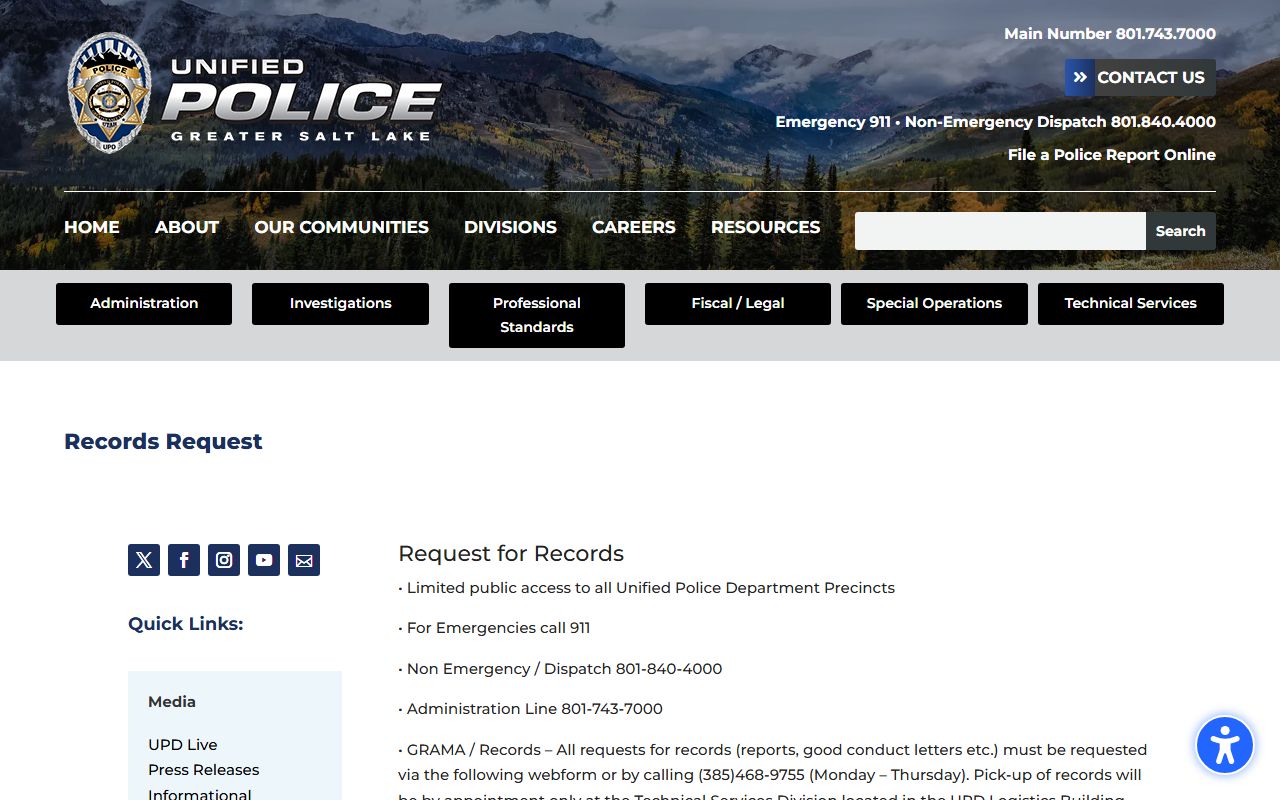
UPD classifies its records by type. Initial reports are primarily public, while follow-up reports and investigative materials carry protected or private classifications under GRAMA.
Note: Local police records and BCI criminal history records are separate systems. A record at one agency may not appear at the other, particularly for arrests that did not result in prosecution.
Utah Criminal History Inquiry Rules
Utah passed a ban-the-box law in 2017 that applies to public sector employers. Under HB0156, state and local government agencies cannot ask applicants about their criminal history until after the interview stage. If no interview takes place, the inquiry must wait until after a conditional offer of employment is extended. The law does not apply to private employers, though they are encouraged to follow similar practices.
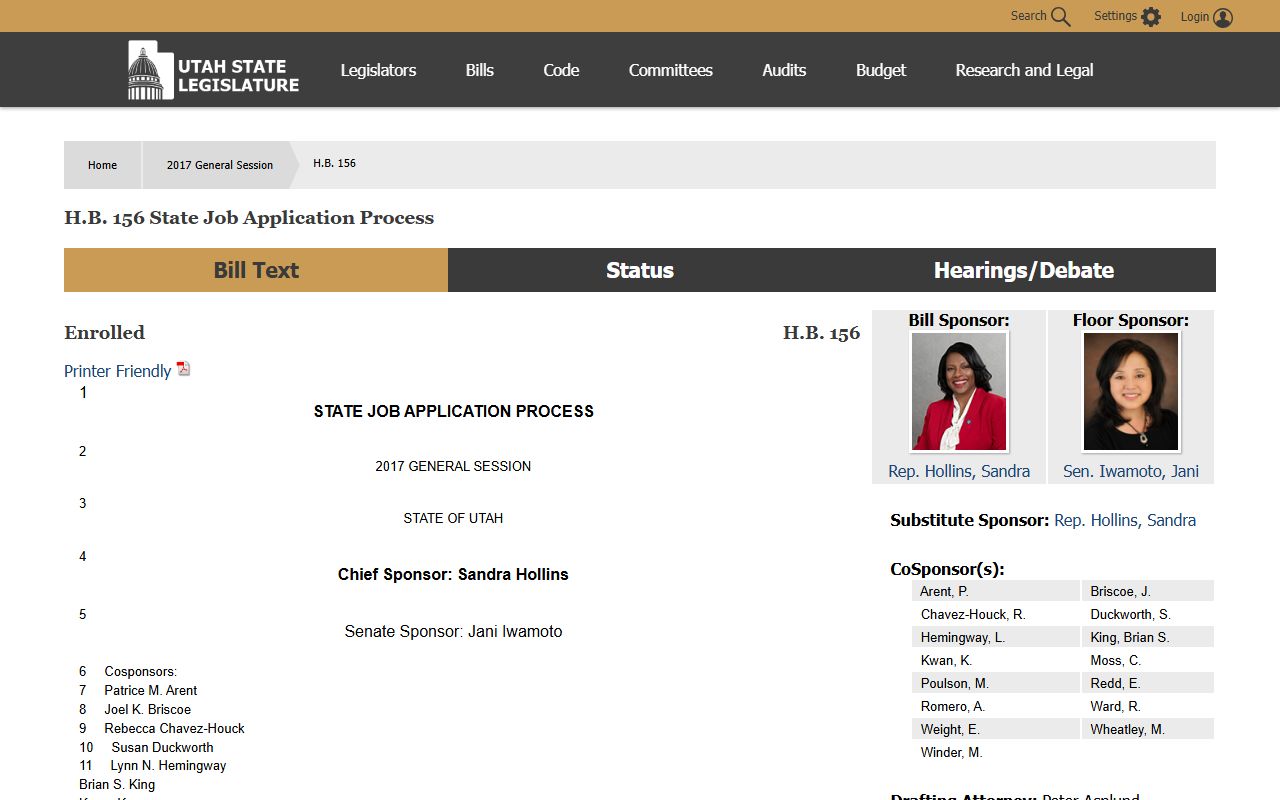
The full text of HB0156 at le.utah.gov details the timeline and scope of the ban-the-box requirement for government employers in Utah.
Browse Utah Criminal History by County
Each of Utah's 29 counties maintains criminal records through its district court and sheriff's office. Select a county below to find local resources for criminal history records in that area.
Criminal History Records by City
Major cities in Utah have local police departments that maintain criminal records alongside BCI and the courts. Select a city to find local criminal history resources.