
Salt Lake City Criminal History Records
Salt Lake City is the state capital of Utah and the most populous city in the state, with about 200,000 residents. Criminal history records in Salt Lake City come from several sources: the Salt Lake City Police Department, the Unified Police Department, the Third District Court, and the Utah Bureau of Criminal Identification. Each source covers different types of information. This page explains where to go, what to ask for, and what you can expect when searching criminal history in Salt Lake City.
Salt Lake City Quick Facts
Salt Lake City Police Department Criminal Records
The Salt Lake City Police Department is the primary law enforcement agency for the city. All records requests go through the GRAMA process at police.slc.gov/grama. You can submit a request online or visit the Records Service Desk in person. The desk is open Monday through Friday, 12:00 PM to 4:00 PM, and is closed on holidays. For records inquiries, call (801) 799-3101. For general questions about the building, lobby hours, or to follow up on a case, call (801) 799-3100.
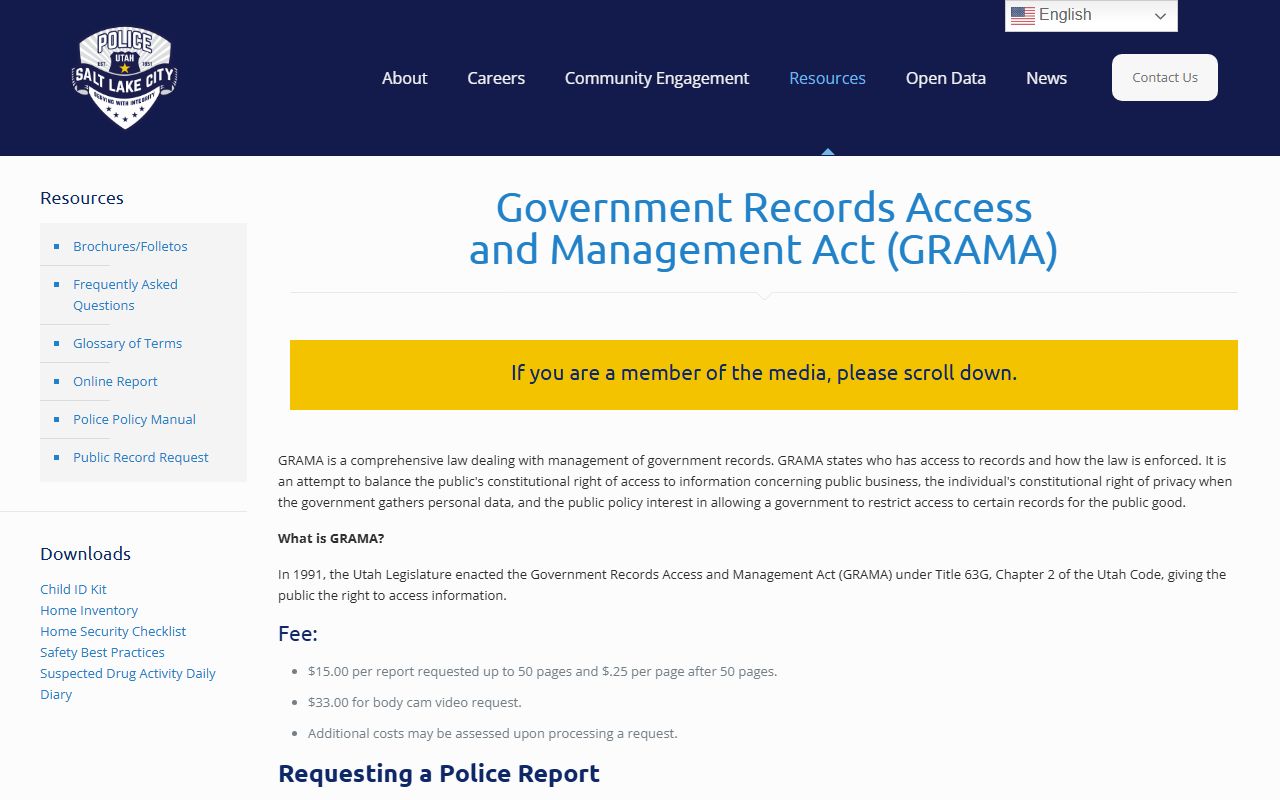
The SLCPD GRAMA Records page is where you start for police reports, incident records, and related documents from Salt Lake City Police.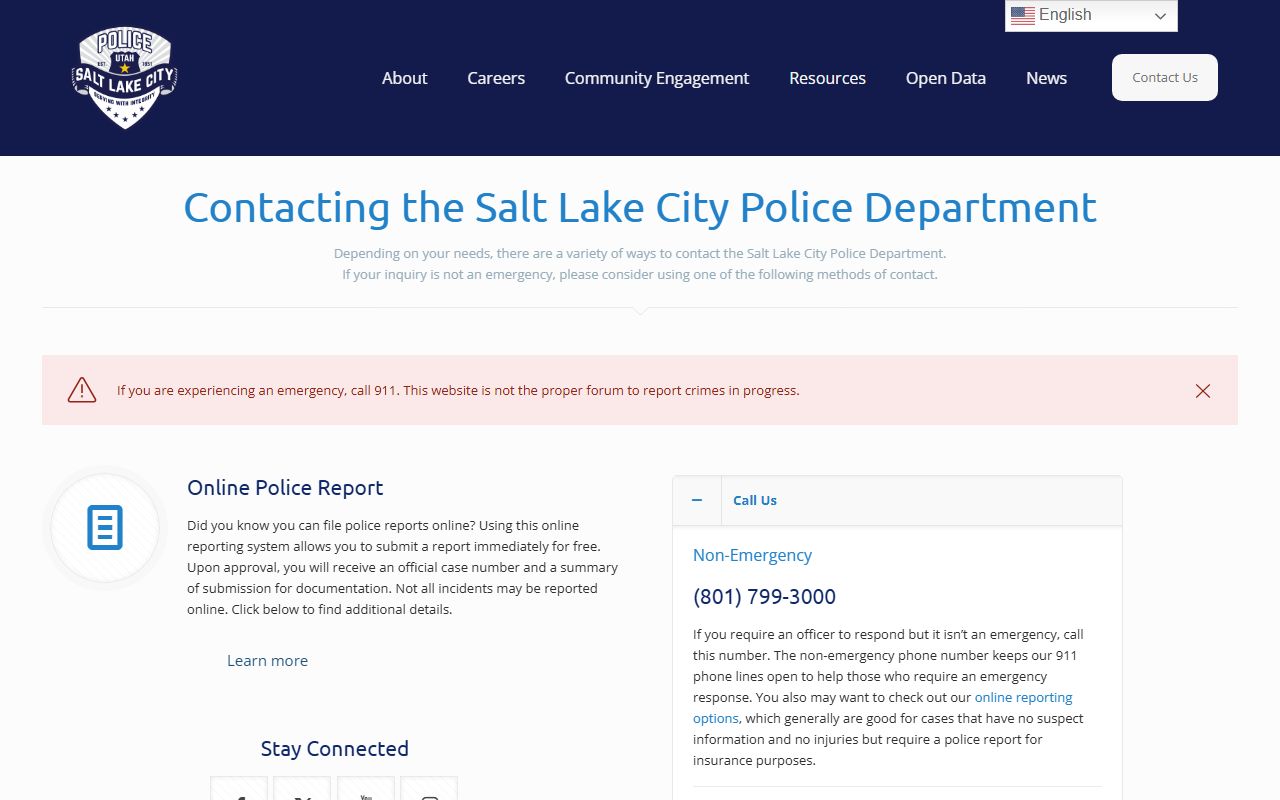
Livescan fingerprinting is available at the Salt Lake City Police Department on a first-come, first-served basis: Monday through Friday, 12:00 PM to 4:00 PM, closed holidays. You must arrive by 3:30 PM to allow for processing time. Livescan fingerprinting is required for certain background check requests that need a fingerprint-based criminal history.
The SLCPD also participates in the Open Data Initiative. This includes crime statistics, use-of-force trends, calls for service data, and weekly CompStat reports. All of this information is publicly available and searchable online. The department uses the National Incident Based Reporting System (NIBRS) for standardized crime reporting.
Under Utah Code § 63G-2-201, most government records are public. The city has 10 business days to respond to a GRAMA request. If a record is classified as protected, private, or controlled, the department must explain the reason in writing. You have the right to appeal a denial.
Note: Juvenile records are not publicly available. They are sealed by default and require a court order to access under most circumstances.
Unified Police Department Records
The Unified Police Department of Greater Salt Lake covers unincorporated areas of Salt Lake County that are not served by a city police department. If an incident occurred in an area served by UPD rather than SLCPD, you need to go to the Unified Police for records. The UPD records request page is at unifiedpoliceut.gov/records-request.
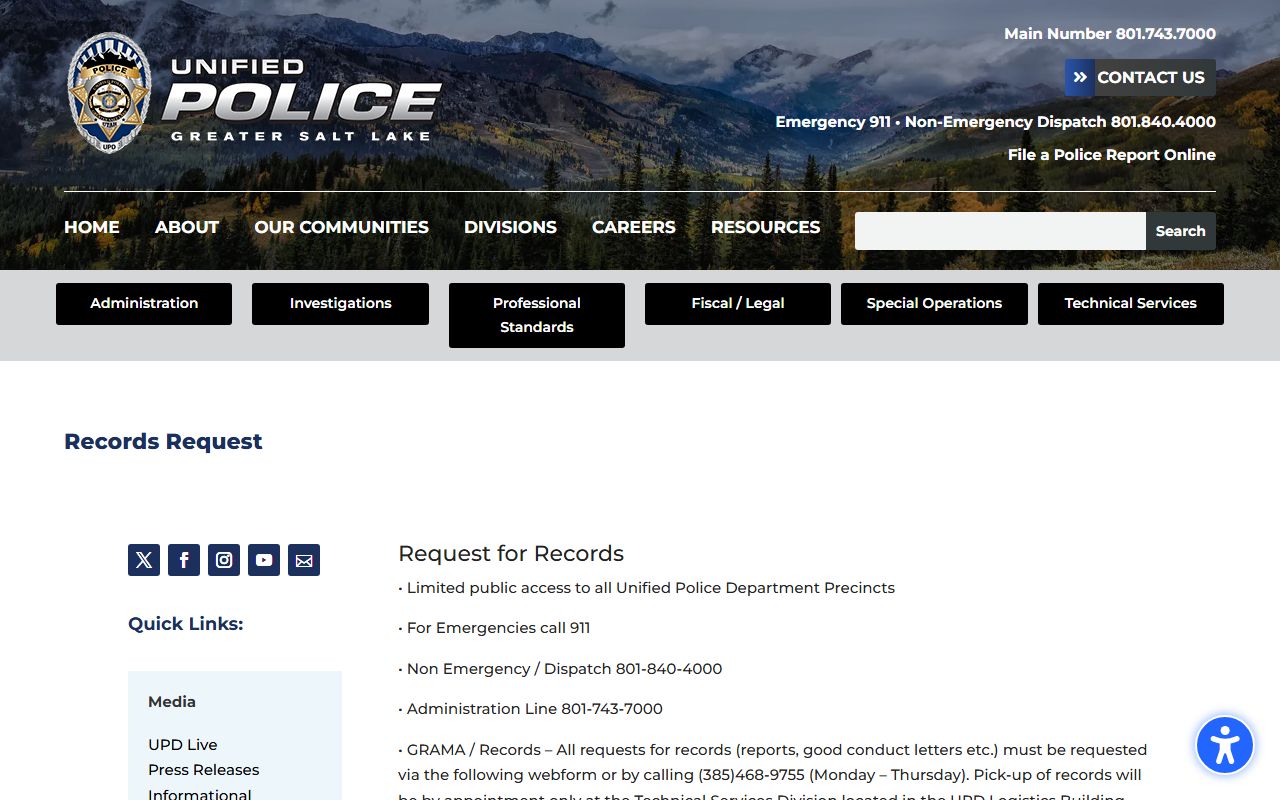
You can reach the Unified Police Department at (385) 468-9755. Reports are available by mail for $10 per report. The mailing address is 5190 Heath Ave, Kearns, UT 84118. If you are not sure whether SLCPD or UPD handled a particular incident, call the records desk for each department. Jurisdiction in the Salt Lake area can be divided in ways that are not always obvious from an address alone.
The Unified Police also has an online records portal where you can submit requests digitally. Response times follow the standard 10-business-day GRAMA window. Fees apply for copies, and valid photo ID is required when picking up records in person.
Statewide Criminal History Through Utah BCI
The Utah Bureau of Criminal Identification maintains the statewide criminal history database. It covers arrests and convictions from Salt Lake City and every other Utah jurisdiction. BCI is the right source when you need a full background check rather than a single police report or court record.
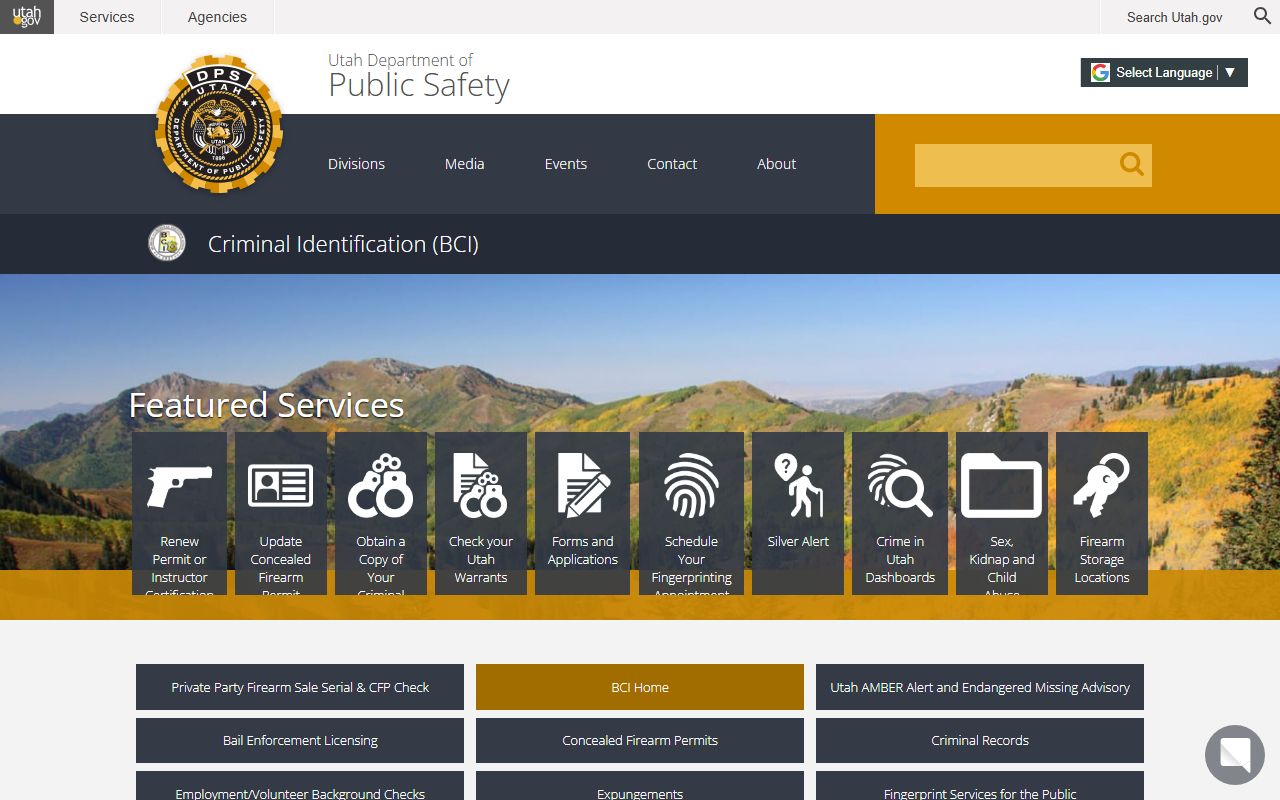
BCI is located at 4315 South 2700 West, Suite 1300, Taylorsville, UT 84129. Phone: (801) 965-4445. As of July 2025, all three search types cost $20: name and date of birth searches, fingerprint-based searches, and checks of your own record. You can request records in person, by mail, or online. For fingerprint-based checks, BCI can take your prints at the Taylorsville office or you can use an approved Livescan provider, including the SLCPD Livescan service described above.
Fingerprint searches are more precise than name searches. A name search may return multiple people with similar names. Fingerprint searches tie results to one specific identity. For any situation where accuracy is critical, a fingerprint-based BCI search is the better option.
The Utah Criminal Identification Act, Title 53 Chapter 10, sets out the rules for how BCI collects, stores, and releases criminal records. This law also defines who may access records and for what purposes. Reviewing this statute is worthwhile if you have questions about what the BCI database includes or who can request it.
Third District Court and Salt Lake City Criminal Cases
All criminal cases from Salt Lake City are filed in the Third District Court. The courthouse is at 450 South State Street, Salt Lake City, UT 84114. Phone: (801) 238-7300. Hours are Monday through Friday, 8:00 AM to 4:30 PM. When a criminal case is filed, it becomes a public court record unless later sealed or expunged.
The free Utah Courts MyCase portal lets you search cases by name or case number. Basic case information is public and available without charge, including party names, filing dates, and case status. For full document access, the XChange system is available for $30 per month. Law firms, researchers, and others who need regular document access typically use XChange.
You can also visit the courthouse in person to review case files. Staff can look up cases by name or case number and assist with getting copies. Certified copies have their own fee schedule. Call (801) 238-7300 before visiting to confirm what you need to bring. Security screens all visitors at the entrance, so bring valid photo ID.
Note: The Scott M. Matheson Courthouse in downtown Salt Lake City is also home to the Utah State Law Library, which is a useful resource for legal research related to criminal history.
Historical Salt Lake City Criminal Records
The Utah State Archives holds some of the oldest criminal records for Salt Lake City. These go back to the nineteenth century. Specific collections include Series 4611, which covers Salt Lake City arrest records from 1871 to 1894. Series 4612 covers 1892 to 1904. Series 4658 covers 1891 to 1897. These records are not in any electronic database and must be accessed at the archives in person.
The Utah State Archives is at 346 S Rio Grande St, Salt Lake City, UT 84101. Their criminal records research guide is available at archives.utah.gov/research/guides/criminal.html. This guide explains what types of historical records exist, which collections are available, and how to search for them. Genealogists and historians researching Salt Lake City criminal history will find the archives an invaluable source.
Salt Lake County also maintains historical records. The Salt Lake County Archives has a FAQ that explains what records are available and how to request them. County records often complement state-level holdings, especially for older cases that predate electronic databases.
Warrants and Offender Records in Salt Lake City
The Utah Statewide Warrant Search is a free public tool that covers active warrants from courts across Utah, including the Third District Court in Salt Lake City. You can search by name at any time. The database is updated regularly and is the fastest way to check whether an active warrant exists.
For people in state custody or on supervision, the Utah Department of Corrections Offender Search is free and publicly available. It shows basic information on individuals in the state system. This covers people sentenced to a Utah state prison from Salt Lake City cases.
Warrants do not expire. They stay active until resolved in court or recalled by a judge. If you find an active warrant related to your name or someone you know, contact an attorney or reach out to the SLCPD Records Service Desk at (801) 799-3101 for guidance before taking further steps.
Expunging Salt Lake City Criminal Records
Utah law allows eligible residents to expunge qualifying criminal records. Once expunged, the record is sealed from public view. Utah's Clean Slate program, launched in February 2022, provides automatic expungement for some low-level offenses without the person having to file a petition. If your record qualifies, it may already be sealed.
For offenses that require a petition, you file with the Third District Court in Salt Lake City. The Utah Courts guide at utcourts.gov/howto/expunge walks through every step in detail. The petition filing fee is $135. After the court grants expungement, you must get a Certificate of Eligibility from BCI for $65. Both steps are required to complete the process.
Not every offense qualifies. Capital felonies, first-degree felonies, and most sex offenses cannot be expunged. Other offenses have waiting periods before you can file. A Class B or C misdemeanor requires a three-year wait. Felonies require longer waiting periods depending on the level. The courts website has a full eligibility chart. Review it carefully before starting.
Salt Lake County also maintains an expungement toolkit. The Salt Lake County Expungement Tool Kit provides step-by-step guidance specific to Salt Lake County residents. This is a useful resource alongside the BCI and Utah Courts materials.
Note: Once a record is expunged, most employers and the general public cannot access it. Certain licensing boards and government agencies may still view expunged records under specific circumstances allowed by law.
Your Rights Under GRAMA in Salt Lake City
GRAMA gives every person the right to request public records from Salt Lake City agencies. You do not need to be a resident or explain why you want the record. The agency has 10 business days to respond. If a record is withheld, a written explanation is required.
You can appeal a denial. The appeal goes first to the agency head. If still denied, you can file with the State Records Committee. The process is designed to be accessible. The GRAMA statute at Utah Code § 63G-2 sets out the full framework of rights and procedures.
Records that are classified as public include most police reports, court filings, and government correspondence. Protected records include active investigation files, juvenile records, and certain victim information. Controlled records require a court order. Knowing these categories helps you set realistic expectations before you submit a request in Salt Lake City.
Salt Lake County Criminal History Records
Salt Lake City is the county seat of Salt Lake County. All criminal cases from the city go through the Third District Court, which serves the entire county. For county-wide resources, court information, sheriff records, and additional background check tools, visit the Salt Lake County criminal history page.
Nearby Utah Cities
Cities near Salt Lake City share the same Third District Court and many of the same state criminal history resources. Select a city below for local information.